How Nano Fertilizer Technology Works
Discover how nanotechnology enables direct foliar nutrient delivery, bypassing the 40-70% nitrogen losses that occur with traditional soil-applied fertilizers.
Understanding Nanotechnology
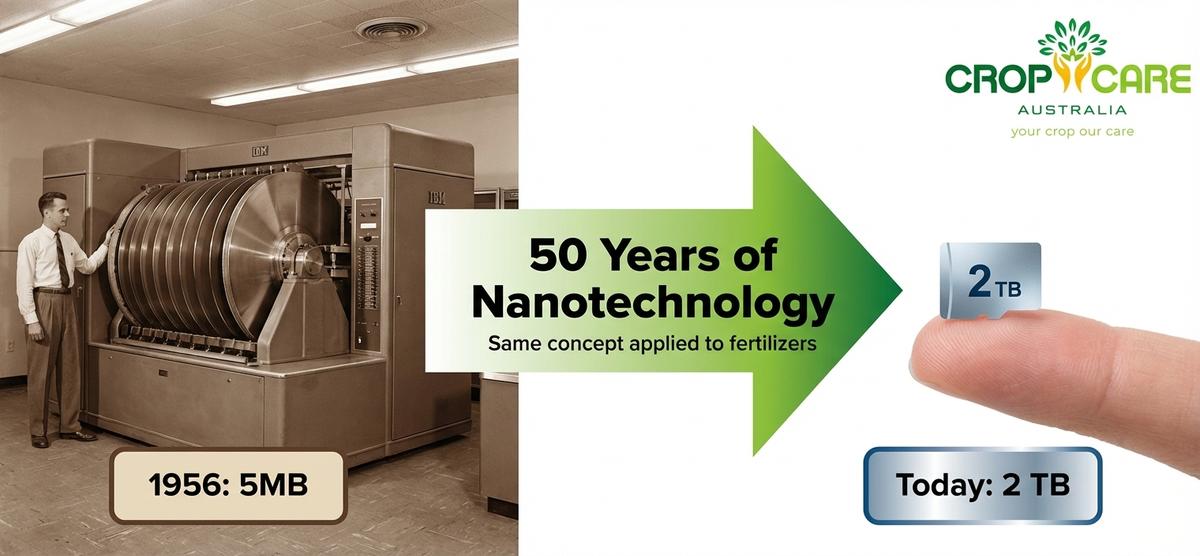
Think about how technology has evolved. In 1956, a 5MB hard disk was the size of a room. Today, a nano memory card smaller than your fingernail holds over 2TB of data.
That same principle of miniaturisation is now applied to fertilizers.
Just as technology shrank from room-sized machines to fingertip-sized chips, nano fertilizer technology creates particles small enough to enter plant cells directly through leaf stomata.
"50 years of technology miniaturisation, now applied to agriculture"
The Problem: Conventional Fertilizer Losses
Why only 30-35% of soil-applied nitrogen reaches your plants
!Conventional Soil-Applied Urea
*Independent research confirms these loss rates for soil-applied fertilizers
✓Nano Foliar Delivery
Foliar application delivers nutrients directly to plant cells
Independent research confirms: Conventional soil-applied fertilizers lose 40-70% of nitrogen to leaching and volatilization. Foliar delivery bypasses the soil entirely, delivering nutrients directly through leaf stomata.
The Problem with Traditional Fertilizers
Understanding where your nitrogen actually goes
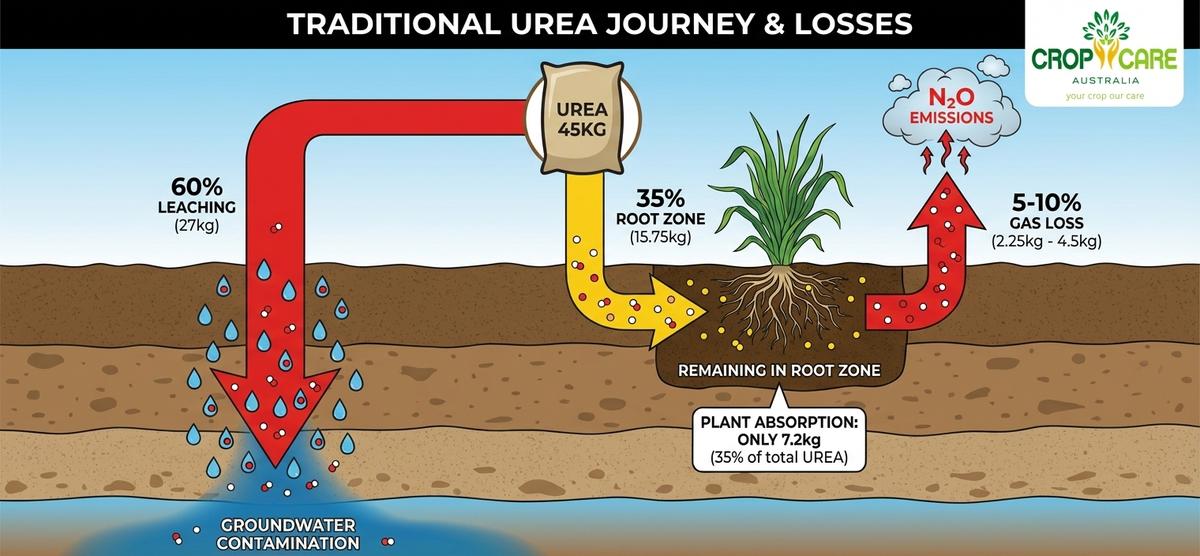
Where Traditional Urea Goes
Lost to Leaching
Washes down through soil, polluting groundwater and causing environmental damage
Lost as Gas (N2O)
Evaporates as nitrous oxide - a greenhouse gas 298× more potent than CO2
Stays in Root Zone
Only this portion remains where plants can potentially access it
Even from the 35% that stays in the root zone, plants cannot absorb it all. The urea forms large clusters that roots struggle to uptake efficiently.
Why Size Matters: The Stomata Story
The secret is in how nano particles enter through leaf pores
Leaf Stomata (Pores)
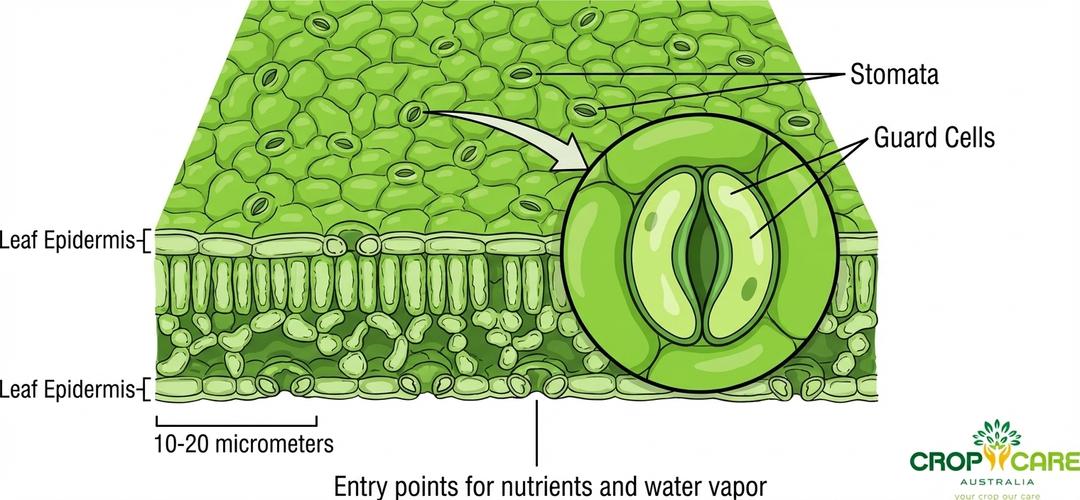
- •Stomata are tiny pores on leaf surfaces
- •Size: 10-20 micrometers wide
- •These are the entry points for water and nutrients
- •Nano particles are small enough to pass through easily
Size Comparison
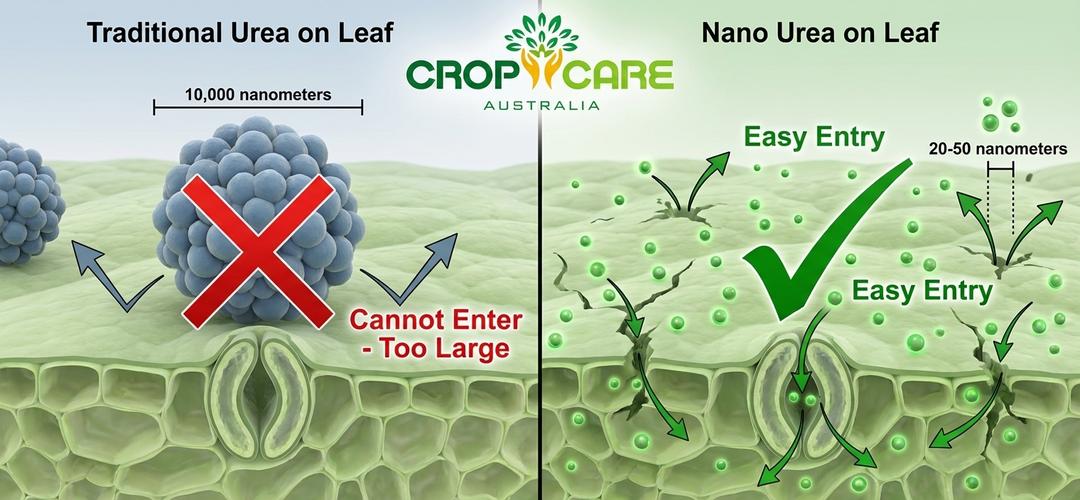
Traditional Urea Cluster
10,000nm
Too large to enter stomata
Nano Urea Plus Particle
20-50nm
Passes through easily
The Key Insight
Traditional urea dissolved in water still forms clusters of 10,000 nanometers. These clusters are simply too large to enter the leaf stomata effectively. Nano particles at 20-50 nanometers are 200-500 times smaller - they pass through stomata AND the tiny cracks on leaf surfaces with ease.
Inside the Nano Particle
How polymer coating technology prevents clustering
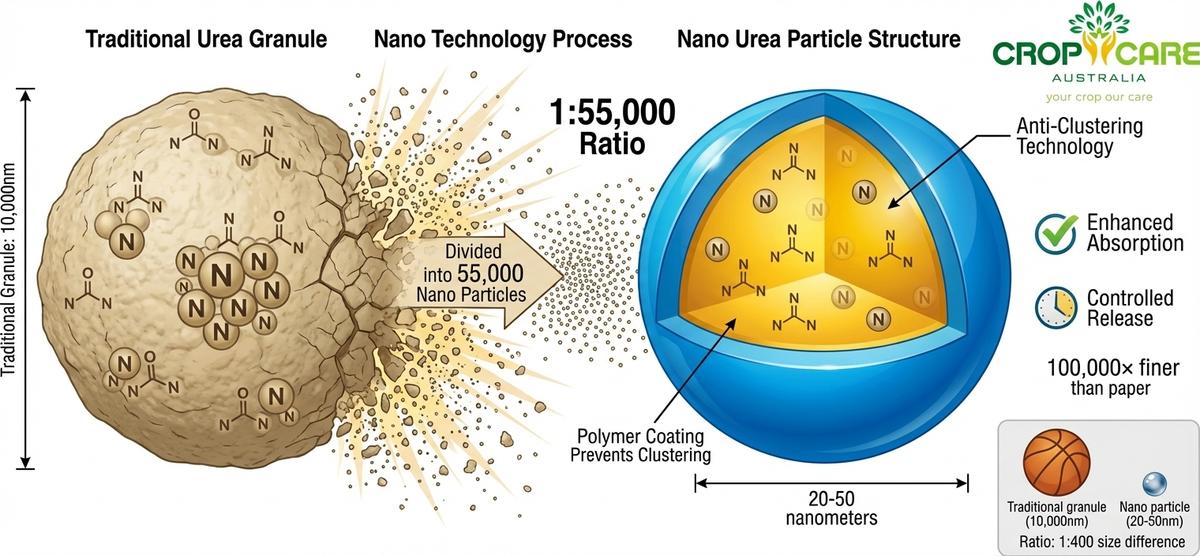
The Technology Innovation
55,000 Particles Per Granule
Each traditional urea granule is precisely divided into 55,000 nano-sized particles using advanced technology
Polymer Coating
Each particle is coated with a special polymer that prevents them from clumping together and enables controlled release
Controlled Release
The coating allows nutrients to dissolve gradually in plant cells, providing sustained nutrition rather than a sudden flood
Technical Specifications+
Particle Size (TEM): 20-50 nanometers (minimum 50% of material)
Particle Size (DLS): 20-80 nanometers (minimum 50% of material)
Surface Charge/Zeta Potential: >15 mV (ensures stability)
pH Range: 4.0-8.5
Viscosity: 5-30 cP
Nitrogen Content: 16% minimum (Nano Urea Plus: 20%)
Specifications as per FCO (Fertiliser Control Order) S.O. 1718(E)
Efficiency Comparison
See the dramatic difference in nutrient absorption
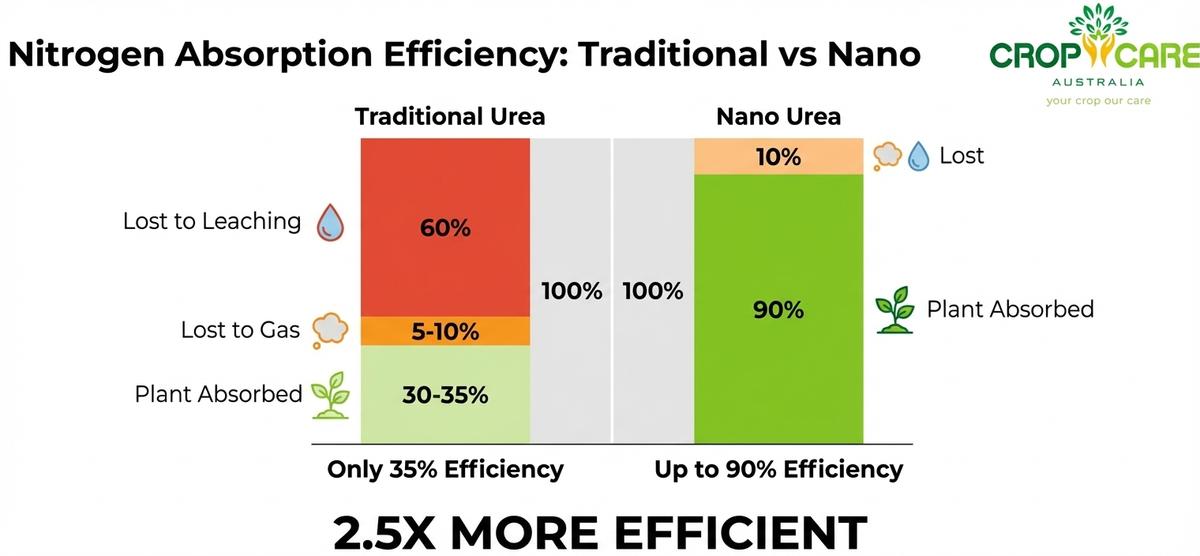
40-70% lost to leaching & volatilization
Bypasses soil losses entirely
Bypasses Soil Losses
Direct to plant cells
What This Means for Farmers
- ✓Nutrients delivered directly where plants need them
- ✓No soil chemistry interference
- ✓Better for soil health and environment
- ✓Works in drought conditions (foliar application)
From Spray to Growth
The 5-step journey of nano nutrients into your plants
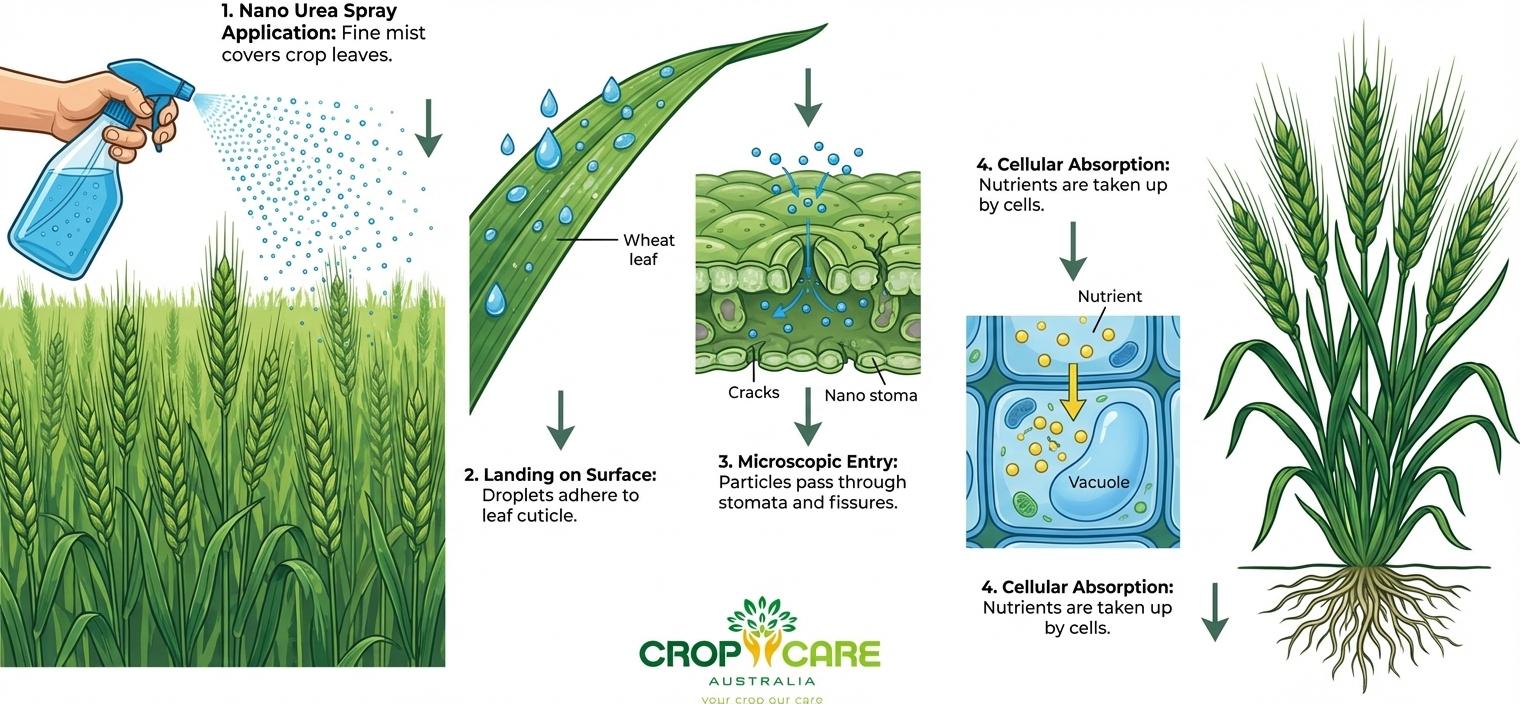
Spray Application
Apply nano urea plus solution to crop leaves using standard spray equipment
Droplet Contact
Fine droplets land on leaf surfaces and spread evenly
Stomata Entry
Nano particles enter through stomata and leaf surface cracks
Cell Absorption
Nutrients dissolve in cytoplasm and enter plant metabolism
Growth Response
Immediate nutrient availability drives healthy plant growth
Best Practices for Application
Timing
Early morning or late evening when stomata are open and evaporation is minimal
Dilution
Mix 2-4ml per litre of water. Apply 500ml bottle per acre (2-4 sprays per season)
Weather
Avoid application during rain or extreme heat. Wind speed below 15 km/h is ideal
The Evolution of Fertilizer Technology
From heavy sacks to smart bottles - continuous innovation
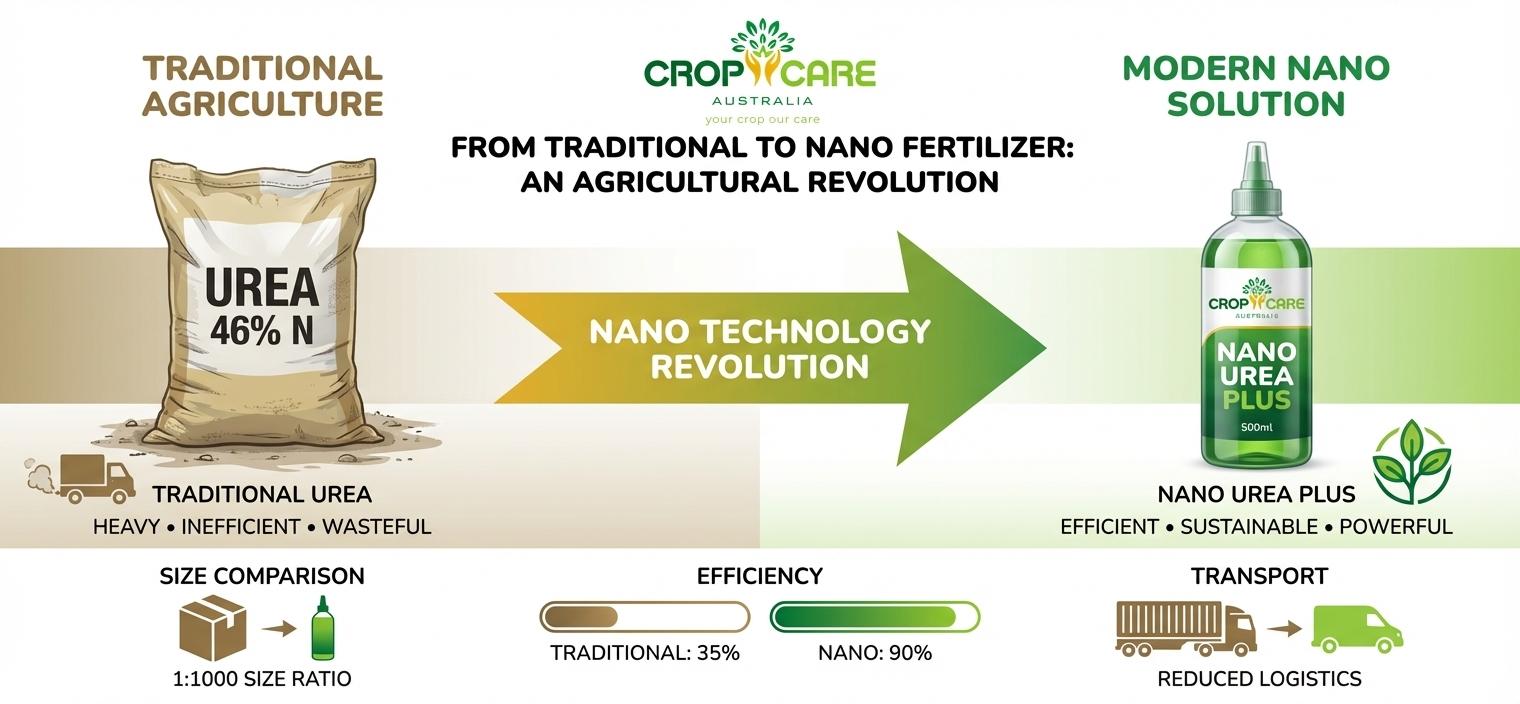
Traditional Era
45kg sacks, 35% efficiency, soil application, high environmental impact
Used for decades, but increasingly unsustainable
First Nano (4%)
Initial nano urea plus with 4% nitrogen, proving the concept works
Important first step in technology development
Nano Urea Plus (16-20%)
Current generation: Direct foliar delivery, bypasses soil losses, used globally
365 million+ bottles sold worldwide
Why Nano is the Future
40-70%
Conventional N losses bypassed
Direct
Foliar nutrient delivery
20-50nm
Particles enter stomata
40+
Countries using technology
Governments worldwide are supporting nano fertilizers as a key tool for sustainable agriculture.
Technical Specifications
Official FCO-certified specifications for our nano fertilizers
Nano Urea Plus (Liquid) 16 - FCO Specifications+
| Total Nitrogen (N) | 16.0% minimum |
| pH | 4.0 - 8.5 |
| Viscosity | 5 - 30 cP |
| Particle Size (TEM) | 20-50 nm (minimum 50% of material) |
| Particle Size (DLS) | 20-80 nm (minimum 50% of material) |
| Surface Charge/Zeta Potential | >15 mV |
| Manufacturer | IFFCO (Indian Farmers Fertiliser Cooperative) |
Reference: FCO S.O. 1718(E)
Nano DAP (Di-Ammonium Phosphate) - FCO Specifications+
| Total Nitrogen (N) | 7-9% |
| Total Phosphorus (P2O5) | 15-17% |
| pH | 3.0 - 6.0 |
| Viscosity | 5 - 30 cps |
| Particle Size (TEM) | 20-70 nm (minimum 50% of material) |
| Particle Size (DLS) | <100 nm |
| Surface Charge/Zeta Potential | >5 mV |
| Manufacturer | IFFCO (Indian Farmers Fertiliser Cooperative) |
Reference: FCO S.O. 1025(E)
Frequently Asked Questions
Can I just dissolve regular urea in water and spray it on leaves?+
No, that won't work the same way. When you dissolve regular urea in water, it still forms large clusters of about 10,000 nanometers. These clusters are too big to enter through leaf stomata effectively. Nano urea particles are specially processed to be 20-50 nanometers and coated with polymer to prevent clustering. This is the key technology that makes nano fertilizers work.
Is nano urea plus safe for the environment?+
Nano fertilizers applied as foliar sprays bypass the soil entirely, which avoids the 40-70% nitrogen losses to leaching and volatilization that occur with conventional soil-applied fertilizers. This means reduced environmental impact and less nitrogen entering waterways. Studies show nano particles at these concentrations are non-toxic to beneficial soil microorganisms. This is why governments are supporting foliar nano fertilizer adoption.
How often should I apply nano urea plus?+
Typically 2-4 foliar applications per season, depending on the crop. Apply at critical growth stages - usually at tillering, vegetative growth, and pre-flowering stages. One 500ml bottle covers approximately 1 acre per application when diluted at 2-4ml per litre of water.
Does nano urea plus replace traditional fertilizers completely?+
Nano fertilizers are designed to supplement and reduce reliance on traditional fertilizers, not necessarily replace them entirely. Most recommendations suggest using nano urea plus alongside a reduced base application of conventional fertilizer. This combination optimises both soil nutrition and foliar uptake while significantly reducing overall fertilizer input costs.
Will nano urea plus work in drought conditions?+
Yes, this is one of the major advantages of foliar-applied nano fertilizers. Traditional soil-applied urea requires soil moisture for uptake by roots. Nano urea is sprayed directly on leaves and absorbed through stomata, so it works even when soil moisture is low. This makes it particularly valuable for Australian conditions where drought is common.
Ready to Try Nano Technology?
Join farmers worldwide using proven nano fertilizer science
365 million bottles sold globally. View peer-reviewed research. Now available for Australian farmers.
Have questions? Read our research page or contact our team